

Study PermitSTUDY PERMIT
Achieve your dreams of pursuing your studies abroadStudy Permit
The study permit is a document that allows foreign nationals to study in a foreign country. Most foreign nationals need a study permit to study in another country outside their country of residence. This document needs to be applied before traveling to that country where you plan on studying. The study permit is not a visa. You still need to apply for a temporary residence visa to be able to enter to a foreign country.

Basic Study Permit Requirements
Requirements vary depending on the country and your application program. Here are some basic requirements commonly submitted for the study permit application:
- Application Form
- Original passports and a copy of the passport bio-data page
- Birth certificate
Notarized Custodianship Declaration – Custodian for Minors Studying, if applicable. If accompanied by one parent for the duration of studies, a notarized consent letter from the non-accompanying parent is required.
- Letter of Acceptance from the Learning Institution where you intend to study stating:
- A personal study plan: A description of your proposed program of studies as it relates to your academic, technical, or vocational background and future career goals.
- Proof of studies: You must provide evidence of all current and past education, including but not limited to:
- Copies of all diplomas and certificates;
- evidence of ongoing enrolment (if applicable);
- Post-secondary transcripts;
- Other academic transcripts (up to date).
- Police Certificates
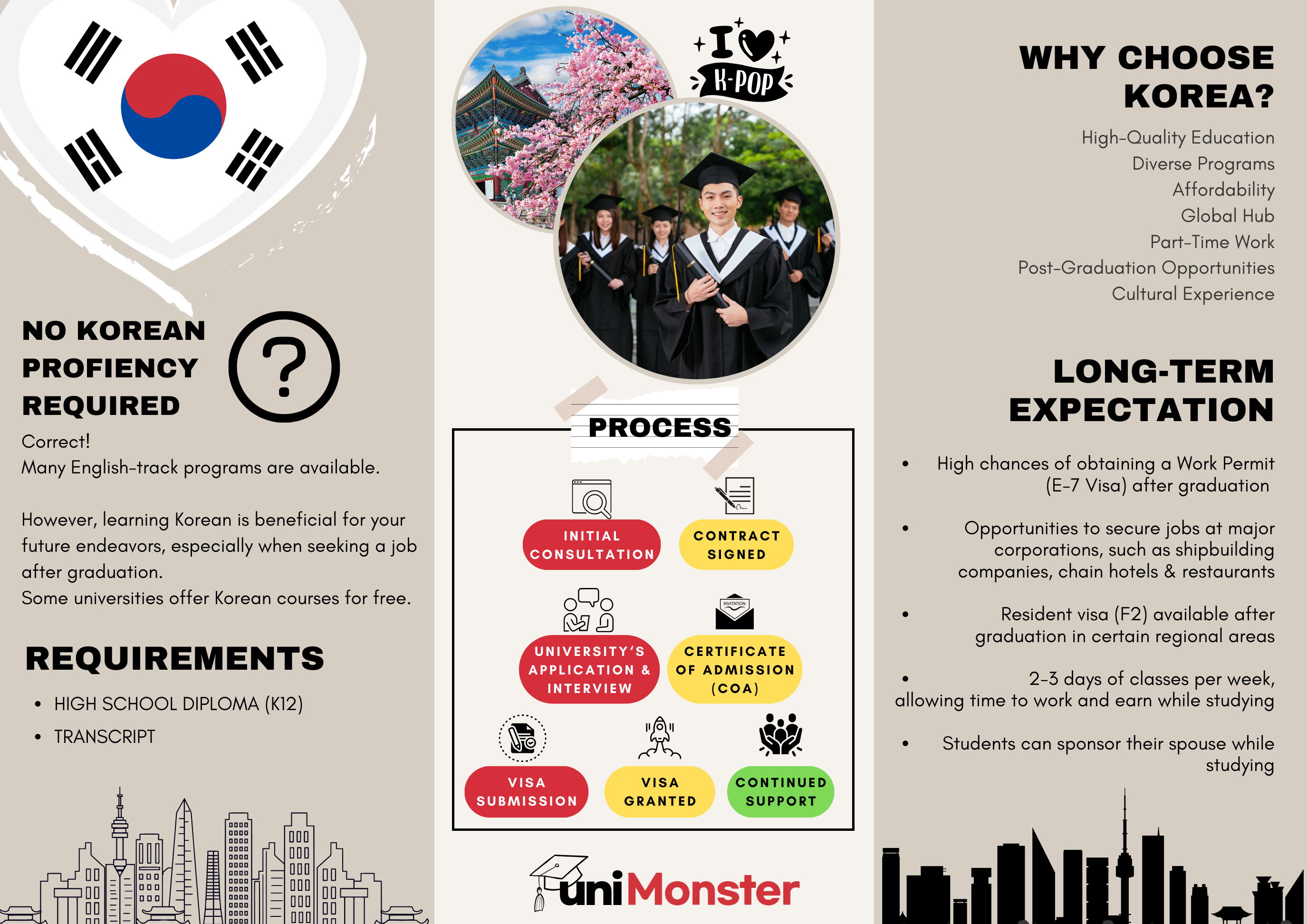
Studying in South Korea offers a wide range of benefits for international students, both academically and personally.
1. High-Quality Education
- Global Ranking: South Korean universities, such as Seoul National University (SNU), KAIST, POSTECH, and Yonsei University, are consistently ranked among the top in Asia and globally. They offer cutting-edge programs in science, technology, engineering, medicine, business, and the arts.
- Innovative Research: The country is a hub for research and innovation, with strong government support in fields like technology, engineering, and the humanities.
2. Affordable Education and Scholarships
- Low Tuition Fees: Compared to Western countries, tuition fees in South Korea are relatively affordable. Public universities, in particular, offer lower fees for international students.
- Scholarship Opportunities: The South Korean government offers various scholarships for international students, including the Global Korea Scholarship (GKS), which covers full tuition, living expenses, and airfare. Many universities also offer their own scholarships to international students.
3. Cultural Experience
- Rich Cultural Heritage: South Korea offers a unique blend of modernity and tradition, from ancient palaces and temples to bustling modern cities. Students can immerse themselves in K-pop, Korean dramas, traditional festivals, and culinary experiences like kimchi-making and hanbok wearing.
- Cultural Exchange: The vibrant international student community provides an opportunity to meet people from all over the world, while also gaining insight into Korean culture and language.
4. Language Learning
- Korean Language: Learning Korean is an added benefit for international students, as it’s an essential tool for personal and professional development. Many universities offer Korean language programs for beginners to advanced learners. Proficiency in Korean can also increase job opportunities, particularly with South Korean companies or in the broader global market.
- English-Taught Programs: Many South Korean universities offer a wide variety of undergraduate and graduate programs in English, making it easier for international students to study without proficiency in Korean.
5. Technological and Industrial Hub
- Global Companies: South Korea is home to major global companies like Samsung, LG, Hyundai, and SK, which provide ample job opportunities for graduates. The country’s emphasis on technological innovation makes it an attractive destination for students pursuing careers in IT, engineering, business, and design.
- Internship and Employment Opportunities: Many universities have partnerships with leading companies, providing students with opportunities to gain hands-on experience, internships, and job placement support.
6. Safety and Stability
- Low Crime Rate: South Korea is known for its safety, with one of the lowest crime rates among developed nations. This makes it an attractive destination for international students who value peace of mind.
- Strong Healthcare System: South Korea’s healthcare system is excellent, offering international students access to affordable medical care through national health insurance (with students usually paying a reduced rate).
7. Convenient Location for Travel
- Access to East Asia: South Korea’s geographic location offers easy access to other major East Asian countries like Japan, China, and Taiwan. This makes it convenient for international students to explore the region while studying.
- Modern Infrastructure: The country boasts excellent public transportation systems, including efficient subways, buses, and high-speed trains, making it easy to get around.
8. Post-Graduation Opportunities
- Career Prospects: Graduates from South Korean universities are highly sought after by global companies, especially those with business operations in Asia. Additionally, South Korea offers several visa programs for international students who wish to stay and work after graduation, particularly in fields like technology, engineering, and business.
- Startup Ecosystem: South Korea’s growing startup culture and government support for entrepreneurship create opportunities for students interested in launching their own businesses.
9. International Community
- Diverse Student Population: South Korea attracts students from all over the world, creating a cosmopolitan atmosphere on campus. Many universities offer international student organizations, events, and support services to help students adjust to life in Korea.
- Language Exchange: There are ample opportunities for language exchange with Korean students, which helps improve both Korean and English language skills.
10. Quality of Life
- Vibrant Cities: South Korea’s cities, especially Seoul, offer a high quality of life with modern amenities, entertainment, and a rich cultural scene. With its combination of traditional elements (temples, markets, palaces) and cutting-edge modernity (skyscrapers, shopping malls, technology), South Korea provides an exciting and dynamic environment for students.
- Healthy Lifestyle: South Korea places a strong emphasis on health and wellness, with a rich food culture, including a variety of healthy options, and an active lifestyle with opportunities for hiking, cycling, and sports.